
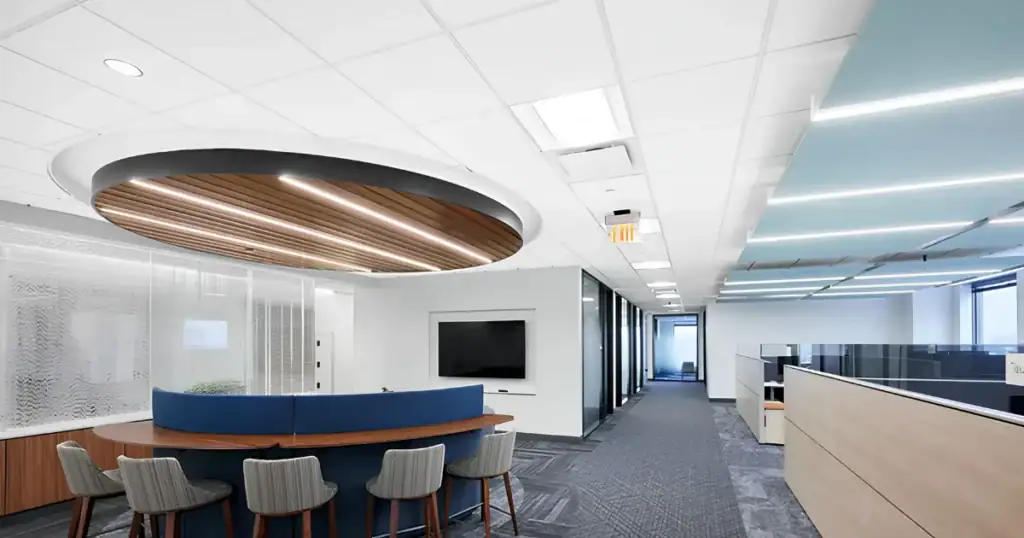
What Are Tectum Ceiling Panels?
Tectum panels are durable, sustainable, acoustical ceiling panels made from bonded wood fibers. The result is a rigid, textured panel built to absorb sound and hold up to impact, which is why Tectum is commonly specified in spaces where a standard mineral fiber tile wouldn’t last: gyms, pools, cafeterias, and other heavy-use interiors that see constant traffic and high noise levels.
Within the Tectum ceiling family, ORO offers three core configurations:
- Tectum Direct-Attach: panels mechanically fastened directly to ceilings and walls, without a suspension grid.
- Tectum Lay-In: panels set into a standard suspended grid system for easier plenum access.
- Tectum Tegular: panels with a reveal edge that drops below the grid for a more finished, shadow-lined look, still using a suspension system.
All three share the same core Tectum substrate and benefits: a range of color options including custom colors, the ability to be field-painted up to 6 times without compromising acoustic or fire performance, and sustainable material composition. What changes from one system to the next is how the panel attaches, and that’s what drives most of the decisions in specifications.


Where Tectum Ceiling Panels Are Typically Used
Tectum’s combination of durability and acoustic control makes it a fit for spaces that are loud, heavily used, or both. Common applications include:
- Education: classrooms, cafeterias, gyms, and corridors in K-12 and higher education facilities
- Pools and gyms: heavy-use interiors where panels need to resist impact and moisture
- Healthcare: hospitals, outpatient centers, and specialty care environments where acoustic comfort matters
- Civic and institutional: government, municipal, and public-use buildings with large volumes and hard surfaces
- Commercial: offices, mixed-use, and interior renovation projects, especially spaces with exposed structure that still need acoustic treatment
- Retrofit: Tectum Direct-Attach is also a great retrofit solution, adding durability and sound performance to existing spaces without a full ceiling rebuild
The common thread isn’t a building type. It’s a set of conditions: heavy use, hard surfaces, noise problems, and the need for a ceiling that will withstand the test of time.

Acoustical and Performance Characteristics
Tectum ceiling panels offer excellent sound absorption, with NRC ratings up to 0.85, which helps to control noise and reverberation in high-traffic, heavy-use interiors.
Beyond acoustics, the performance characteristics that matter most for a spec include:
- Class A fire performance: standard across the Tectum ceiling line
- 75% light reflectance: relevant for daylighting and energy calculations
- Mold- and mildew-resistant surface: with HUMIGUARD Plus humidity resistance available for pools and other high-moisture spaces
- Impact resistance: a key differentiator from standard acoustical tile in gyms, cafeterias, and other heavy-use spaces
- Repaintability: panels can be field-painted up to 6 times without compromising acoustic or fire performance, which matters for long-term maintenance
Specification Considerations and Requirements
Before locking in a panel type, here are some of the project conditions to work through in order to actually determine whether Tectum ceiling panels are going to perform the way you want them to:
Structural deck type and plenum depth. Direct-Attach needs a suitable substrate to fasten to and no plenum access. Lay-In and Tegular need a grid system and enough plenum depth for the suspension system, plus room for any MEP running above the ceiling. In renovation work, existing conditions often narrow the options before design preferences even enter the conversation.
Access requirements. If mechanical, electrical, or fire suppression systems above the ceiling need regular access, Lay-In or Tegular is usually the better fit. If the ceiling is acoustic or decorative with no plenum coordination needed, Direct-Attach can simplify installation.
Environmental exposure. Pools, kitchens, and other high-humidity spaces call for HUMIGUARD Plus or another humidity-resistant option. Covered exterior spaces need panels and attachment methods rated for that exposure.
Expected use of the space. Gyms, cafeterias, and corridors see a different level of contact than a corporate office. Attachment method and panel density both affect how a system holds up over time.
Systems that look alike on paper. Two Tectum systems with similar appearance can vary in attachment method, structural requirements, and real-world acoustic performance. These differences aren’t always obvious in early design. They tend to surface during pricing and submittal review, which is the most expensive time to find them.

Common Questions Architects Have
How do I choose between Direct-Attach, Lay-In, and Tegular?
Start with plenum access and appearance. Do you need to reach MEP above the ceiling regularly? Lay-In or Tegular is the better fit. If no plenum coordination is needed, or working with an existing deck in a renovation, then Direct-Attach is usually the better choice. Tegular tends to get specified when the reveal edge and shadow line are a design priority alongside grid-based access.
Can Tectum handle a pool or another high-humidity space?
Will repainting affect acoustic or fire performance?
What's the difference between a full ceiling system and an exposed system like clouds or baffles?
It usually comes down to plenum conditions and how much of the ceiling needs coverage. Full ceiling systems make sense when MEP needs to be concealed, or continuous coverage is required. Exposed systems, clouds or baffles, work well when the plenum is limited or congested, or when acoustic treatment is only needed in specific areas.
How to Simplify the Spec Process
The panel selection is rarely the hard part. The conditions around it are what matter when making the best choice for your project. Plenum depth, roof deck type, environmental exposure, access requirements, and transition details all need to be worked out before a Tectum system goes into a spec section.
ORO Architectural Solutions works with design teams to define the right ceiling system early, and we help match Direct-Attach, Lay-In, or Tegular to how your space needs to perform and how the system will actually be built, so your spec holds up from design through submittal.
Contact us for help with your specs. Our team can help confirm the right Tectum system for your project.