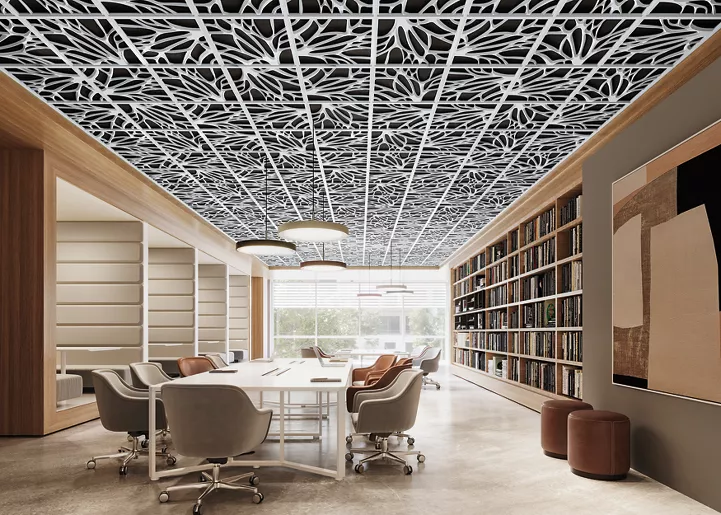
Tectum Direct-Attach Ceilings

For Projects Requiring Acoustic Control Without a Suspended Ceiling

Acoustical Ceiling Panels Built for Direct-Attach Installation

Tectum Direct-Attach and Direct-Attach High NRC ceiling panels are designed to provide durable, sustainable, acoustical performance for your project. Available in a range of color options, these panels can be mechanically fastened to a variety of ceiling surfaces for premium compatibility that provides superior sound absorption.

Contemporary Tectum direct-attach ceilings in a stylish lounge setting.

Where Tectum Direct Attach is specified

Tectum Direct Attach is specified where a ceiling needs to withstand impact, moisture, or an exposed structural deck while still controlling reverberation.
Indoor sports facility with Tectum direct-attach ceilings and running track.

Gymnasiums and multi-use assembly spaces

With no suspended grid to damage, panels mounted directly to the deck hold up under the ball impact and heavy use gymnasiums see daily. Absorption reduces the reverberation that turns a full gymnasium into an echo chamber during events, and the same durability holds up in rooms that shift between athletic, assembly, and event use without a fixed ceiling plane.
Indoor swimming pool with Tectum direct-attach ceilings and modern design.

Natatoriums and aquatic centers

Sustained humidity is a common point of failure for ceiling systems, whether through panel degradation or corrosion of a suspension grid. Direct Attach is built to perform in the humidity and chemical exposure of a natatorium or aquatic center without a grid to maintain.
Modern interior featuring Tectum direct-attach ceilings and large windows in a school hallway.

Corridors in hospitals and schools

Long corridors with hard flooring and hard wall surfaces generate reverberation that affects speech intelligibility, and hospital and school corridors also see continuous contact from carts, gurneys, and foot traffic. Direct-attach mounting holds up better under that kind of daily wear than a suspended tile system.
Underground parking garage with Tectum direct-attach ceilings and safety markings.

Parking structures and transit facilities
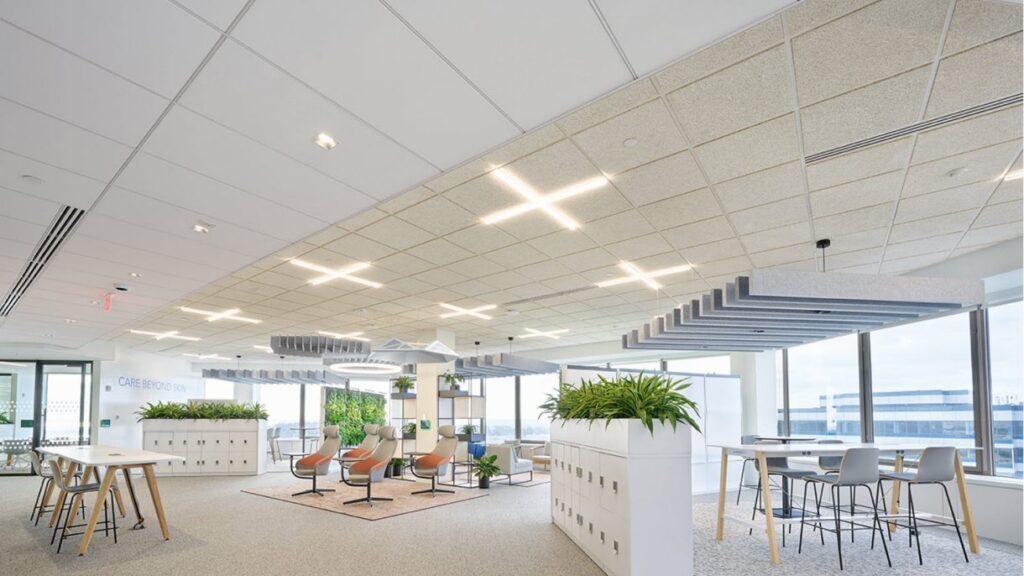
Exposed concrete and steel construction with no finished plenum makes a suspended ceiling impractical. Direct Attach addresses the acoustic reflection common in parking and transit spaces by working against the existing structure rather than requiring a grid to be built.

When a different product is the better fit

Where a project calls for a flat, finished ceiling plane at standard height with accessible plenum space, such as a typical classroom or office, Tegular or Lay-In is generally the appropriate specification. Direct Attach is intended for exposed structure, high-wear environments, or applications where the ceiling also functions as a durability layer.

Key Features of Tectum Direct-Attach Ceilings

Blueprint icon for architectural solutions and designs

Customized Design Options

Tectum Direct-Attach ceiling panels are available in a variety of colors, including custom colors to match the aesthetics of your project space seamlessly. They can also be field-painted up to 6 times without compromising the acoustic or fire performance of the panels.
Long-lasting acoustic control icon

Increased Durability & Reduced Noise

Installing Tectum Direct-Attach panels directly to the ceilings of your project space provides increased durability and longevity. With excellent sound absorption, NRC up to 0.85, these panels can transform your space efficiently and effectively.
Expert architectural solutions icon

Great For A Range of Applications

These ceiling panels are suitable for heavy-use interiors, including pools, gyms, schools, exterior-covered spaces, and more. Tectum Direct-Attach is also a great retrofit solution to improve the durability and sound performance of existing spaces.

Brands We Carry

ARMSTRONG CASTWORKS Architectural Forms logo
ARMSTRONG Tectum Ceiling and Walls logo
BOK Modern logo
Elastizell logo
MBI logo
Parallel Architectural Products
Siplast logo

Other Architectural Solutions

FAQ: Tectum Direct-Attach Ceilings

Our experts are ready to help. Contact us today to get started.

Both are the same panel construction and mount the same way, so durability, moisture performance, and installation method don’t change between them. The difference is in the acoustic fill and facing treatment, which is tuned to push absorption higher across the frequency range that matters most for speech and impact noise.

Standard Direct-Attach handles general noise control in spaces where some reverberation is tolerable. High NRC is the correct call in a gymnasium during full-capacity events, a natatorium where sound reflects off water and hard surfaces simultaneously, or any space where an acoustic consultant ran a reverberation time calculation and returned a target the standard panel wouldn’t hit.

If a specific RT60 or NRC target was set during design, that number determines which panel is correct.

Steel deck, concrete deck, and wood deck are all viable substrates.

On steel and wood deck, panels are typically fastened directly through the panel into the structure. On concrete deck, or where the deck surface is irregular or the fastening pattern needs to be independent of deck geometry, panels are mounted to furring or hat channel secured to the deck first, then fastened to that framing.

Which approach applies depends on deck material, deck condition, and the fastening pattern the acoustic and fire performance require, confirmed against the actual deck construction on the project.

No separate moisture coating is required. The panel material is inorganic and resists the degradation that affects panels relying on paper facings or fibrous fill in sustained humidity, which is why it holds up in pool environments without a suspended grid to maintain. Fastener hardware and any factory or field-applied finish do vary by facility, since chlorine off-gassing, saltwater systems, and UV-based disinfection each affect coatings and metal fasteners differently.

Direct-Attach carries fire-performance data developed for commercial specification, including flame spread and smoke development classification tested to standard methods. Whether that satisfies a given occupancy depends on the complete ceiling assembly, including substrate and any insulation or air barrier above it, and on the occupancy classification under the applicable building code. The same panel can be approved on one project and require an alternate means of compliance on another with a stricter occupancy classification or a different authority having jurisdiction.

You largely don’t. Direct-Attach fastens straight to the structural deck with no plenum, so ductwork, conduit, sprinkler branch lines, and any equipment requiring periodic access need to be routed and located before the panels go up, or located somewhere other than above this ceiling. Projects that need ongoing access to above-ceiling systems, a typical office or classroom with VAV boxes and light fixtures needing service, are better served by Lay-In or Tegular, where individual tiles lift out without disturbing the field.

Absorption increases with panel thickness up to a point, and thickness also affects mounting depth, weight, and cost. The right thickness is derived from the room’s volume, surface finishes, and the reverberation time or NRC value the design is targeting, typically established through an acoustic calculation. Two gymnasiums of similar size can call for different panel thicknesses if one has significantly more hard, reflective surface area than the other.
Yes, provided the space is genuinely protected from weather exposure and not just covered overhead. A covered walkway that still receives wind-driven rain, standing moisture, or direct sun for extended periods during the day functions as an exterior exposure condition. That distinction changes both the finish specified and the fastening hardware, since standard interior-rated fasteners and finishes aren’t built for that duty cycle.
Spec language is developed from the project’s actual performance requirements. The NRC or reverberation target, substrate type, required fire rating, and finish are confirmed against the specific project, then translated into Division 09 language that reflects those exact requirements rather than boilerplate referencing options that may not apply to the job.

Proudly Serving The Southeast

Our experts are proud to serve the Southeast region of the United States, including Tennessee, Georgia, Florida, Alabama, and the Carolinas.

Proud Member Of

Learning Environments logo
AWCI Association of Wall and Ceiling Industry
NRDCA - National Roof Deck Contractors Association
IBEC - international Institute of Building Enclosure Consultants
AIA